AI software development in Germany – from model to production system
ProWebSolutions develops AI-enabled software in which language models, speech processing, image analysis and AI APIs become part of reliable business applications. We work from Leipzig, Germany, with direct technical responsibility for integration, architecture and operation.
A powerful model is not yet a reliable application
Large language models can analyse text, structure information, translate content and identify complex patterns.
A production application needs more.
Inputs must be prepared. Context must be selected. Results must be validated and stored. Permissions and data ownership have to remain clear. Long-running work may require queues and workers. Failure paths and uncertainty need explicit handling.
AI software engineering is the work that connects model capability with these operational requirements.
Infrastructure model
API integration or self-operated AI
There is no single correct infrastructure model.
For some applications an established external AI API provides the best balance of quality, speed and cost.
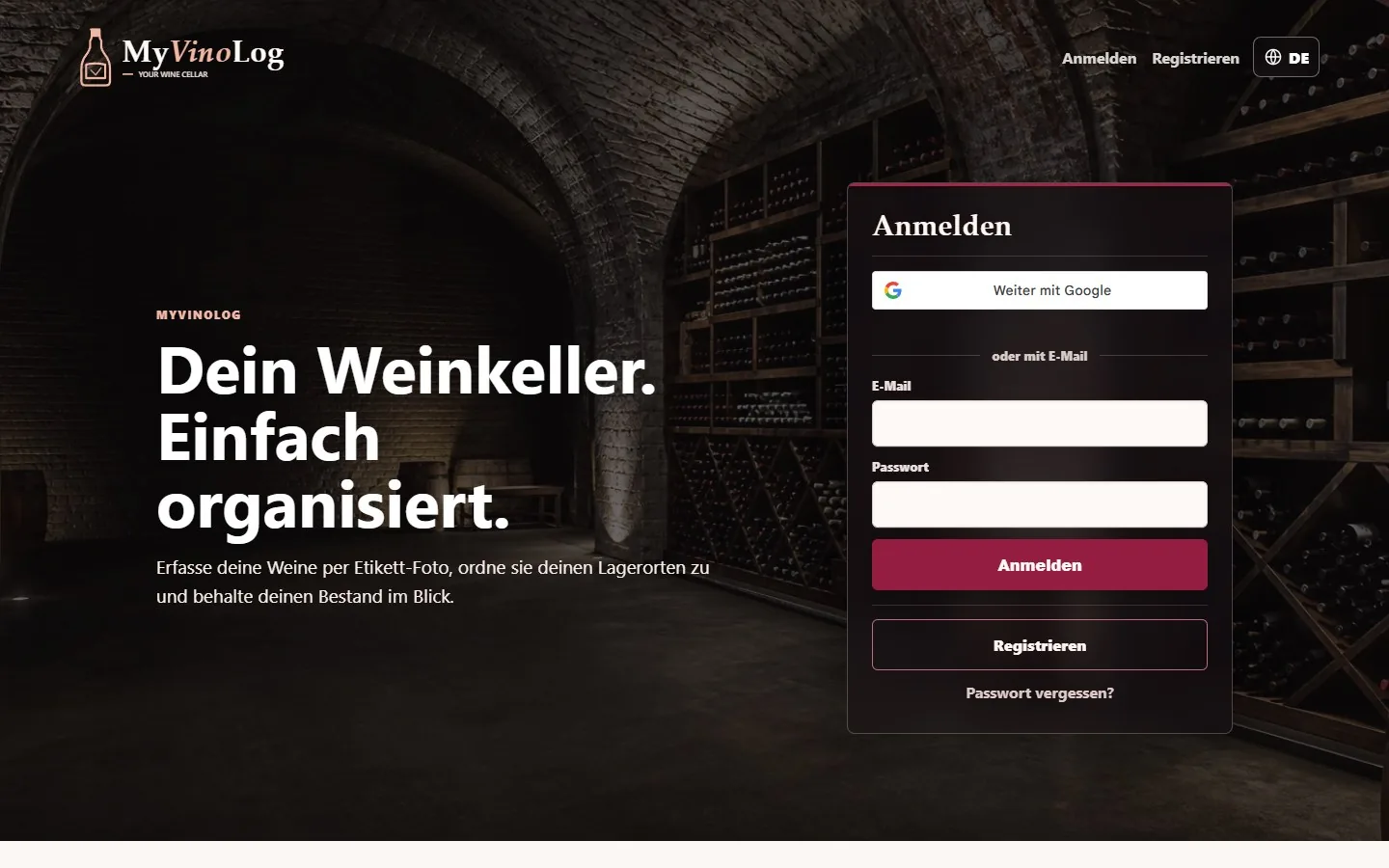
MyVinoLog uses this approach to analyse wine-label images and transform the result into structured data that the user can verify.
Other products require more control.
Mementri processes highly personal information and uses self-operated language and speech infrastructure within Europe.
Verbison uses controlled language-model and text-to-speech infrastructure for multilingual website audio.
The architecture should follow the use case rather than ideology.
Traceable context
LLM integration with controlled context
The main engineering challenge around large language models is often not generating text.
It is controlling what information the model receives, which decision it is allowed to make and how the result can be traced back to source data.
Mementri is one example.
Instead of continuously feeding an expanding personal history into one large prompt, processing is divided into smaller specialised analysis steps.
Original source information remains available and derived information is connected back to it.
This reduces unnecessary context and makes the resulting system easier to reason about.
Voice and language
Speech and multilingual AI workflows
AI applications increasingly move beyond typed text.
Mementri uses speech-to-text so a user can capture thoughts naturally.
Verbison follows the opposite direction: website content can be translated, prepared for spoken delivery and converted into audio through text-to-speech.
These workflows combine several systems: speech recognition, language processing, translation, content segmentation, audio generation and application integration.
The value lies in coordinating them as one product.
Asynchronous processing
Queues, workers and AI infrastructure
Large models and media processing tasks should not block a normal web request.
Where required, ProWebSolutions uses broker, queue and worker architectures to move compute-intensive processing into dedicated infrastructure.
Different tasks can be processed independently and chained when one result becomes the input for another.
This architecture allows the visible application to remain responsive while complex work continues in the background.
Frequently asked questions about AI software development
Does an AI application require a custom-trained model?
Usually not. Existing models can often provide the required capability while the engineering effort focuses on data flow, context, validation, integration and operation. Custom training only makes sense where the use case justifies it.
Can AI be hosted without sending data to a public AI provider?
Yes, depending on the required model and infrastructure. ProWebSolutions operates language and speech components for selected products within European infrastructure.
Can AI be added to an existing application?
Yes. An AI component can be integrated into an existing system when suitable data and interfaces are available. Data ownership, error handling and the boundary between deterministic logic and model decisions must remain explicit.
Do all automation projects need AI?
No. Traditional software logic can be more reliable for deterministic technical processes. We deliberately use AI only where its capabilities create real value.
Have an AI use case but no production architecture yet?
Describe the process, available data and expected result. We can determine whether an external AI API, self-operated model or conventional software architecture is the most appropriate approach.